Insurance Fraud Investigation in Kent with Covert Surveillance
Insurance fraud investigations often depend on patience, professional observation, and the ability to gather clear evidence without alerting the subject. In this case, a two-day covert surveillance task was commissioned in Kent, South East England, to help establish whether an individual was fraudulently exaggerating or misrepresenting an injury said to prevent him from walking.
The instruction was to provide a covert surveillance operative to monitor the subject at his home address in Kent and determine whether he was in fact able to walk, bear weight, and move about unaided. The case formed part of a wider insurance investigation, with the client seeking reliable surveillance evidence that could be used to assess the legitimacy of the claim.
A particular challenge from the outset was that neither we nor the client had a confirmed visual identification of the subject. We had the address, but not a verified description of the male in question. That meant the operation was not simply about gathering footage of movement, but first about establishing who the subject actually was before any later observations could properly carry evidential value.
Day One: Establishing Identity and Initial Movement
On the first day of surveillance, our operative took up a covert static observation position near the subject’s residence in Kent. The objective was to remain undetected while monitoring activity at the property and identifying the subject.
Although the available footage and evidence on the first day was more limited than what would later be obtained, the day was still operationally important. During the course of the surveillance, the operative was able to observe the male subject outside the address and, crucially, identify him. That identification was significant in its own right. Before that point, there had been no confirmed visual description available to either the client or the surveillance team. As a result, day one not only produced useful observations, but also established the subject’s identity for evidential purposes and supported any subsequent investigation.
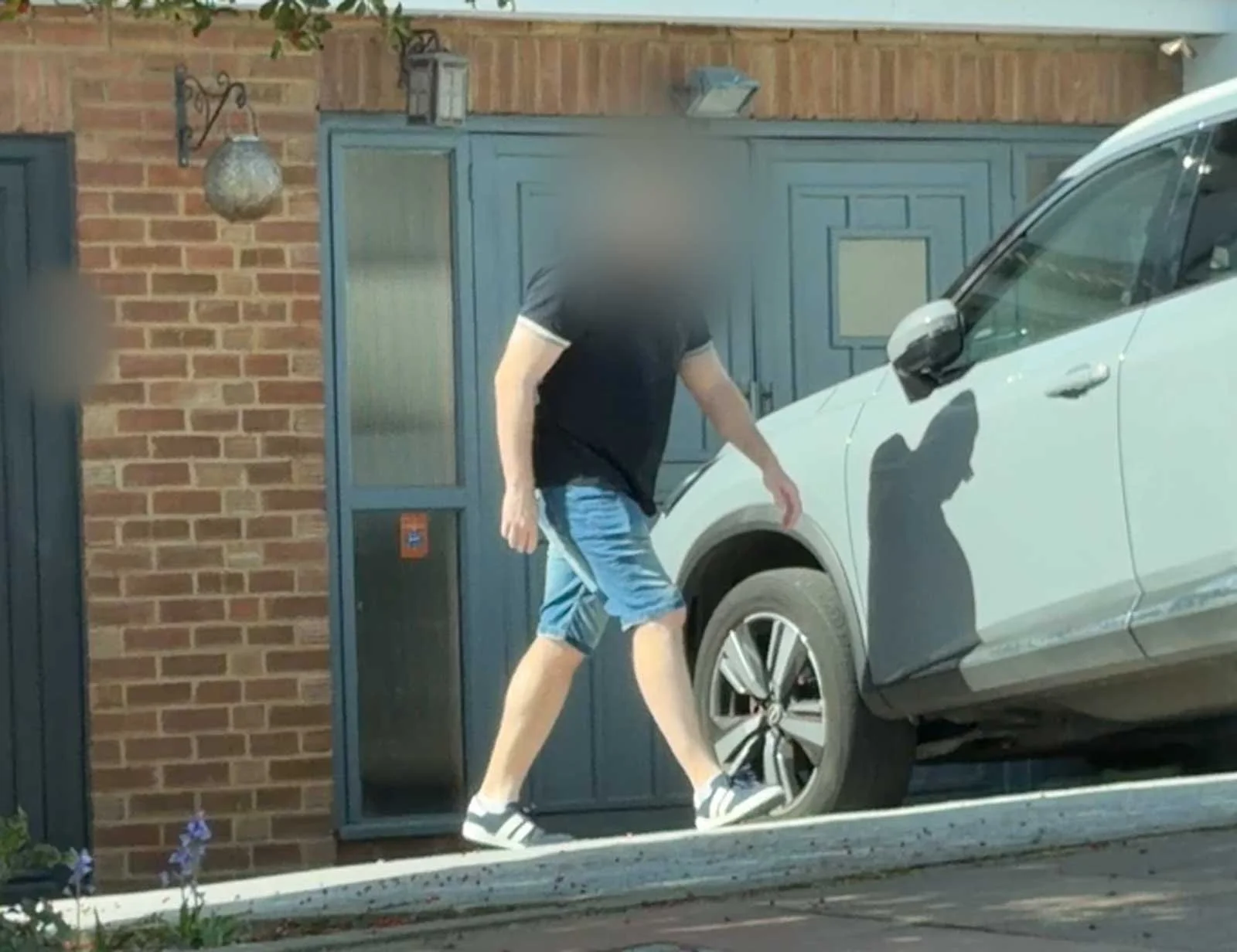
Once identified, the subject was observed walking to and from the outside of his home and placing rubbish in the bin. These movements were important because they showed him using his feet and moving about the property without any obvious assistance. Later in the day, the subject was also observed driving with family members to visit relatives. This required the surveillance to move from static observation to a mobile follow using vehicles, allowing continuity to be maintained while the subject travelled away from the home address.
Although the footage from day one was not as substantial as that gathered later, the observations were still valuable. They demonstrated limited but clear unaided movement and, just as importantly, provided the positive identification that would assist the second day of surveillance and any later enquiries connected with the insurance fraud investigation.
Day Two: Stronger Evidence of Mobility
The second day of covert surveillance in Kent proved more evidentially significant. With the subject already identified from the previous day, the operative was able to maintain focused observation and assess his movements with greater confidence and continuity.
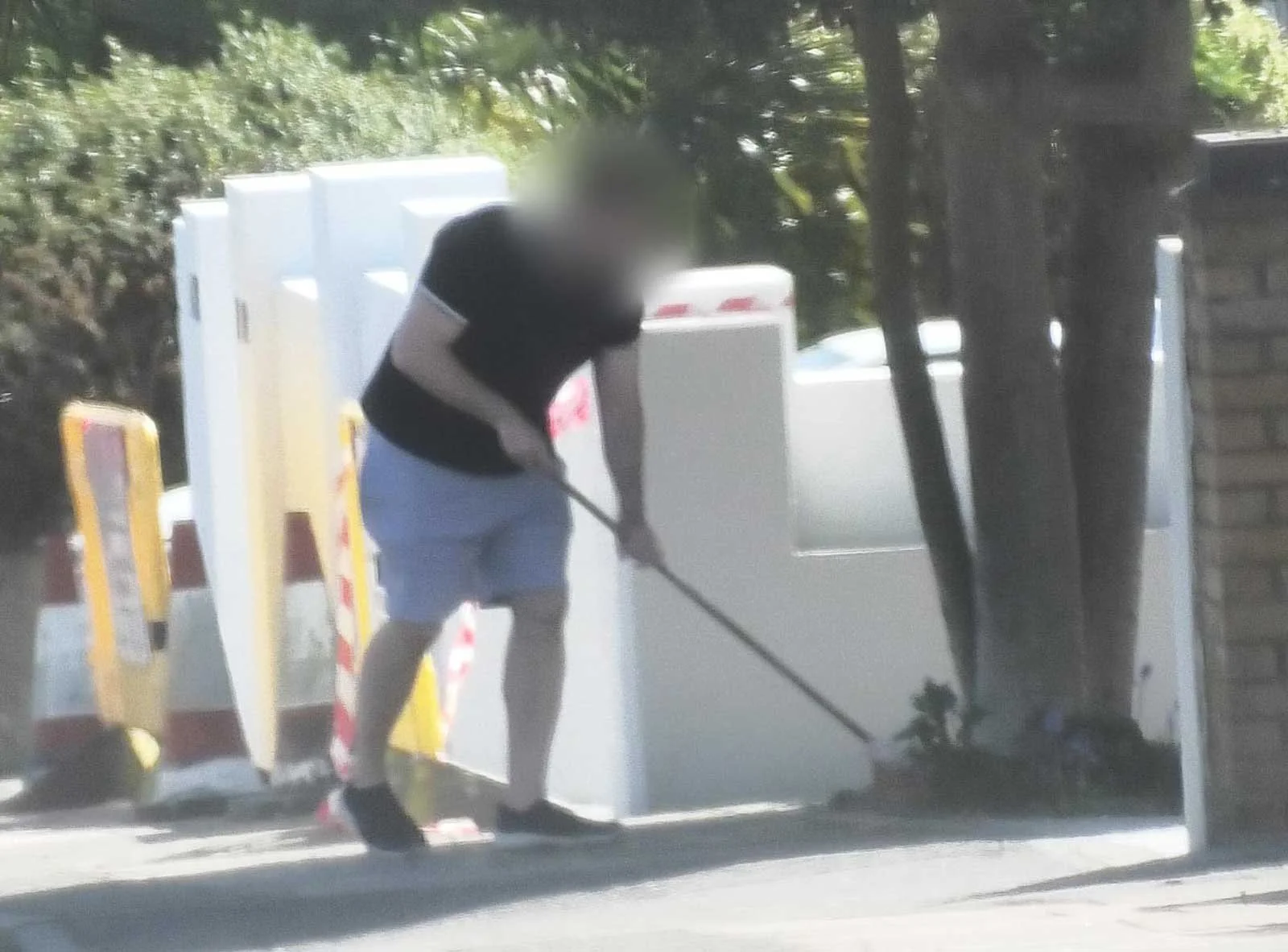
During the course of day two, the subject was observed carrying out home maintenance at the front of the property. Most notably, he was seen using a broom to sweep the driveway. This activity clearly showed him standing, walking, shifting weight through his legs, bending his knees, and moving about without any visible sign of impairment consistent with an inability to walk.
These observations were important for the client’s insurance investigation because they went beyond brief incidental movement. The subject was not merely stepping outside momentarily. He was carrying out purposeful physical activity involving balance, coordination, weight transfer, and sustained use of his legs and feet. At no stage was there any obvious sign of injury, significant restriction, or apparent impediment in his movement.
For the purposes of an insurance fraud investigation, that distinction matters. Clear footage of ordinary day-to-day movement can be useful, but footage showing a subject undertaking practical physical tasks often carries even greater value when assessing whether a claim may be dishonest or exaggerated.
Covert Surveillance Conducted Without Detection
Throughout the two-day deployment, the surveillance was carried out covertly and without detection. Remaining unseen is a vital part of effective covert surveillance, particularly in insurance investigations where any indication of observation may alter a subject’s behaviour and compromise the evidential value of the operation.
The observations were recorded using professional covert surveillance equipment, allowing the relevant movements and activity to be captured and preserved as evidence for the client. Once collated, that material was provided to the instructing client for use in whatever further action, assessment, or claims process they considered appropriate.
Our role was to gather the evidence objectively, professionally, and lawfully. In this case, that role was fulfilled successfully. Over two days, the operative was able first to identify the subject and then to capture footage showing mobility and physical activity inconsistent with the alleged inability to walk.
The Value of Patience and Proper Surveillance
This case study highlights the value of patience and methodical surveillance in insurance fraud investigations in Kent and across the South East of England. Day one did not produce the strongest footage of the entire operation, but it still achieved a critical objective by identifying the subject and providing initial evidence of unaided movement. That, in turn, directly supported the stronger evidential capture obtained on day two.
Surveillance of this nature requires more than simply waiting with a camera. It requires patience, focus, sound judgement, covert positioning, effective mobile follow capability, and the discipline to remain alert for the moments that matter. In this case, those qualities enabled the operation to produce meaningful evidence of suspected fraudulent activity.
Insurance Fraud Investigations in Kent, London, and the South East
Insurance fraud investigations often depend on discreet evidence-gathering that shows what a subject is actually able to do in real life. Covert surveillance can play an important role in establishing whether a claim appears genuine, exaggerated, or potentially false.
This two-day surveillance task in Kent demonstrated exactly that. Through careful observation, positive identification, and recorded evidence of physical mobility, the operation provided the client with material of clear investigative value.
If you require covert surveillance, an insurance investigation, or support with a suspected insurance fraud matter in Kent, London, or elsewhere in the South East of England, Mike Golf Security & Investigation can assist with discreet, professional, evidence-led investigative services.